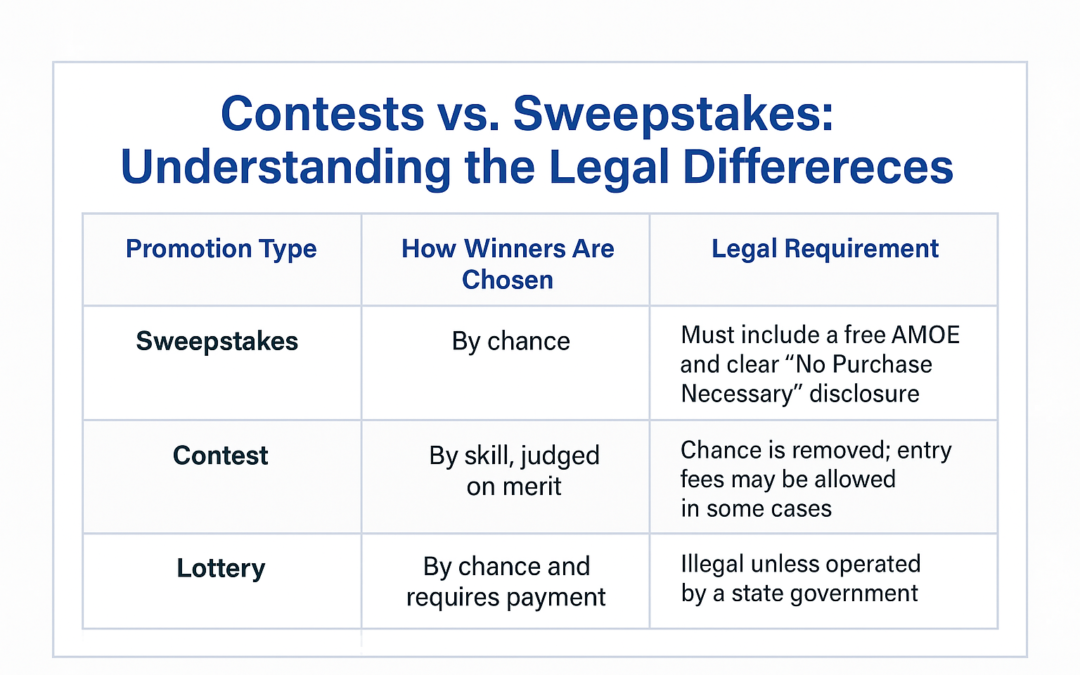
Opening the "Official Rules" page of a sweepstakes can feel like reading a foreign language. Marketing teams love the excitement of a giveaway, but corporate lawyers fill the fine print with dense, confusing legal terms to protect the company.
If you want to protect your entries, avoid immediate disqualification, and understand your rights when you win, you need to crack the code. Here is a plain-English guide to the most common sweepstakes legal jargon you will encounter in 2026.
The Core Definitions: Who and What
Before diving into the complex clauses, let's establish the baseline terms used to describe the players and the prizes.
-
Sponsor: The brand, company, or corporate entity that is paying for the promotion and providing the prizes (e.g., a major beverage brand or a retail chain).
-
Administrator: An independent, third-party compliance agency hired by the sponsor to manage the backend mechanics. They handle drawing the names, verifying the winner identities, and managing the legal paperwork.
-
Entrant: You—the person submitting their data for a chance to win.
-
Approximate Retail Value (ARV): A good-faith estimate of what the prize is worth on the retail market before the contest starts. This is the number printed in the official rules.
-
Fair Market Value (FMV): The actual open-market value of the prize at the exact moment it is delivered to you. This is the final number the IRS cares about, and it can sometimes be lower than the ARV due to market sales or depreciation.
The Clauses You See on Every Ad
When you see a quick social media ad or a television commercial for a giveaway, specific legalese is always displayed in the footnotes.
1. "No Purchase Necessary."
This is not a friendly gesture; it is a strict federal requirement. By law, private companies cannot run a lottery. A lottery consists of a Prize, Chance (random luck), and Consideration (paying money or putting in major effort to enter). To keep their promotion legal, brands must eliminate consideration. "No Purchase Necessary" means you have the absolute right to enter without spending a penny.
2. "Alternate Method of Entry" (AMOE)
Because of the rule above, if a brand gives entries to customers who buy a product (e.g., "Buy a meal, get an entry code"), they must provide a parallel, completely free path to enter. This is the AMOE. It usually involves filling out a simple online form or mailing in a handwritten index card.
3. "The Equal Dignity Rule."
This legal doctrine ensures that people using the free AMOE path are treated with the same respect as paying customers. The free entries must give you the same odds of winning, have the identical deadline, and put you in the same drawing pool as someone who spent thousands of dollars buying products.
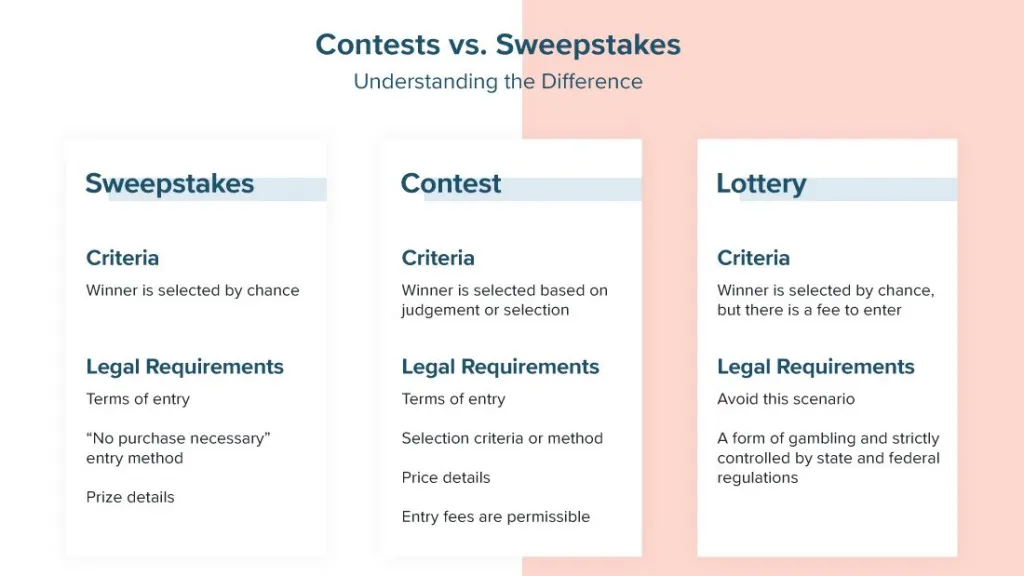
Sweepstakes Legal Jargon Explained for Beginners
The Winner's Paperwork Vocabulary
If luck strikes and your name is drawn, the independent administrator will send you a packet of documents. You must sign these to move from a "potential winner" to a "verified winner."
┌────────────────────────────────────────────────────────┐
│             THE VERIFICATION PAPERWORK TRIO            │
└───────────────────────────┬────────────────────────────┘
                            │
         ┌──────────────────┼──────────────────┐
         ▼                  ▼                  ▼
┌─────────────────┐┌─────────────────┐┌─────────────────┐
│ THE AFFIDAVIT   ││ LIABILITY RELEAS││ PUBLICITY RELEAS│
├─────────────────┤├─────────────────┤├─────────────────┤
│ You swear under ││ You agree not to││ You give the    │
│ oath that you   ││ sue the sponsor ││ brand rights to │
│ followed all the││ if the prize    ││ use your name & │
│ entry rules.    ││ causes an issue.││ image in ads.   │
└─────────────────┘└─────────────────┘└─────────────────┘
-
Constructive Receipt: A tax term meaning that money or an asset is considered yours the moment it is made available to you, even if you haven't physically picked it up yet. This dictates which tax year a prize belongs to.
-
Form W-9: A standard IRS form where you provide your legal name, address, and Social Security Number. Sponsors are legally barred from sending you a high-value prize until you provide this information.
The 2026 Tax Threshold Translation
The word "tax" is the most critical piece of jargon to understand. Under the federal One Big Beautiful Bill Act (OBBBA) of 2026, the reporting limit is locked at $2,000.
If you win a prize (or a combination of prizes from one sponsor) worth $2,000 or more, it triggers mandatory tracking. The sponsor will send you a Form 1099-MISC the following January, with the prize value listed in Box 3 (Other Income). The IRS stacks this amount on top of your standard job income, which can push you into a higher progressive tax bracket and create an out-of-pocket tax bill.
Clear the Jargon and Sweep Safely with KTS
Understanding the difference between an ARV and an FMV helps you play the game smart, but it doesn't change the fact that a major win can bring a major tax liability. Many beginners stop entering sweepstakes altogether when they realize that a "free" prize can trigger an expensive tax bill.
A Keep The Sweep (KTS) membership is designed to remove that barrier completely. For a $25 annual fee, our community-backed system acts as your ultimate financial protector.
When you win a prize that triggers a Form 1099-MISC, you don't have to stress over tax brackets or asset liability. Through our community-funded model, KTS steps in to settle the federal and state income tax liabilities for your registered wins directly with the revenue departments. KTS handles the legal and financial complexities so you can ignore the confusing jargon, fill out your affidavits with confidence, and keep 100% of what you won.
FAQ for this Post
-
Q: What does "void where prohibited" mean?
-
A: This is a blanket protection clause for the sponsor. It means that if the sweepstakes violates a specific, quirky law in your local state or city, the promotion is automatically canceled for residents of that area, protecting the company from being sued.
-
-
Q: Is "ARV" always the price I would pay in a retail store?
-
A: Not always. The ARV is determined months before the sweepstakes launches. If the item goes on sale, or if the manufacturer drops the price before you receive it, the open-market value (FMV) might be lower than the stated ARV.
-
-
Q: Can I refuse a prize after signing the Affidavit of Eligibility?
-
A: Once you sign the affidavit and the sponsor processes the transfer, ownership is technically complete. If you want to decline a prize to avoid taxes, you must do so before signing the releases by requesting a formal Waiver of Prize form.
-
-
Q: Why do so many sweepstakes exclude residents of New York and Florida?
-
A: NY and FL have strict consumer laws requiring brands to register and buy a financial bond for any sweepstakes with a prize pool over $5,000. To save money on administrative paperwork and bonding fees, smaller brands often choose to simply block residents of those states from entering.
-