Promotional contests offer exciting opportunities, but success starts with knowing the rules. This guide clarifies the framework governing participation in U.S. sweepstakes, helping you avoid common pitfalls while maximizing your chances.
Legal contests differ from illegal lotteries through three elements: prize distribution, method of selection, and whether participants provide value (consideration). Properly structured promotions eliminate monetary requirements to comply with state and federal rules.
Entry restrictions serve multiple purposes. They protect consumers from predatory practices while helping sponsors manage participation volume. These limitations also ensure fairness by preventing individuals from gaining disproportionate advantages.
The regulatory landscape combines FTC guidelines with varying state laws. California and Florida, for example, have unique disclosure requirements. Staying informed helps participants recognize legitimate opportunities and avoid disqualification.
Key Takeaways
- Legal sweepstakes require no purchase or payment (consideration)
- Entry caps prevent unfair advantages and ensure equal opportunity
- Federal Trade Commission guidelines shape national standards
- State laws may impose additional participation requirements
- Proper compliance protects both contestants and sponsors
- Strategic planning increases valid entry opportunities
Introduction to Sweepstakes and Entry Limits
Companies across industries deploy random-draw promotions as strategic engagement tools. These initiatives create excitement while maintaining legal compliance through careful design. Let's examine their core components and operational safeguards.
Defining Chance-Based Promotions
A sweepstakes operates on pure luck rather than skill. Participants gain access to prize opportunities without financial commitments. This structure makes them distinct from contests requiring talent evaluations.
Key characteristics include:
| Feature | Sweepstakes | Contests |
|---|---|---|
| Entry Requirement | None | Skill demonstration |
| Winner Selection | Random draw | Judged performance |
| Legal Considerations | No purchase needed | Skill-based criteria |
Why Participation Controls Matter
Restrictions on entry frequency protect both sponsors and participants. They prevent automated systems from flooding submissions while keeping administrative costs manageable.
Effective controls achieve three goals:
- Ensure equal winning chances for all
- Maintain promotion budgets
- Comply with multi-state regulations
Brands using these promotions must balance engagement with legal requirements. Proper implementation creates positive experiences while avoiding regulatory pitfalls.
Key Sweepstakes Terminology and Concepts
Mastering promotional terminology helps participants identify legitimate opportunities. Clear definitions separate compliant operations from questionable schemes while clarifying participant rights.
Understanding Consideration vs. Chance
Legal distinctions hinge on three elements: prizes, selection methods, and participation costs. Lotteries require all three components, while sweepstakes contest structures remove financial barriers to comply with regulations.
| Feature | Sweepstakes | Contests | Lotteries |
|---|---|---|---|
| Entry Requirement | None | Skill demonstration | Payment required |
| Winner Selection | Random chance | Judged performance | Random draw |
| Legal Consideration | Prohibited | Allowed through skill | Mandatory payment |
Essential Keywords and Definitions
Participants should recognize these critical terms:
- Sponsor: Organization funding the promotion
- Void where prohibited: Geographic participation limits
- Official rules: Legally binding operation guidelines
Prize categories range from cash awards to experiential packages, each carrying unique tax responsibilities. Free entry methods like mail-in submissions ensure accessibility without purchases.
Official Rules Impacting Sweepstakes Entry
Every legitimate promotion operates under precise guidelines that protect participants and organizers. These frameworks ensure transparency while meeting legal standards across jurisdictions.
No Purchase Necessary Policy
The purchase necessary clause remains critical for legal compliance. Free entry options like mail-in requests or online forms must always exist alongside paid alternatives.
| Entry Method | Purchase-Based | Free Option |
|---|---|---|
| Retail receipt | Required | Not applicable |
| Online form | Optional | Available |
| Mail submission | Prohibited | Mandatory |
This structure prevents classification as illegal lotteries. Sponsors must clearly describe both pathways in their official rules.
Winner Selection and Prize Details
Transparent processes govern how winners get chosen and receive awards. Odds winning calculations depend on total entries, while prize descriptions outline exact specifications.
| Prize Element | Description | Requirements |
|---|---|---|
| Retail value | $500 gift card | Tax documentation |
| Experiential | Vacation package | Travel dates |
| Cash award | $1,000 check | W-9 submission |
Eligibility requirements address age limits (usually 18+) and residency rules. All details must appear in the promotion's official rules before the start date.
State and Federal Sweepstakes Laws in the United States
The U.S. legal framework for promotions combines national standards with local variations. Sponsors must navigate overlapping regulations to ensure compliance and maintain consumer trust.
State-specific Regulations
Three states impose strict registration requirements for high-value promotions:
- Florida and New York mandate registration for prizes exceeding $5,000, requiring bonds matching the total prize value
- Rhode Island triggers registration at $500 for retail-based promotions
| State | Threshold | Bond Requirement |
|---|---|---|
| Florida | $5,000+ | Full prize value |
| New York | $5,000+ | Full prize value |
| Rhode Island | $500+ (retail) | Not required |
Federal Compliance Overview
The FTC and FCC enforce truth-in-advertising laws for national promotions. Key federal requirements include:
- Banning false claims about winning odds
- Mandating clear disclosure of free entry methods
- Prohibiting unauthorized use of telecom services
Interstate promotions often require legal review to address conflicting state rules. Proper planning prevents penalties and ensures fair participation across all 50 states.
Strategies for Entering Sweepstakes Safely
Maximizing your chances in promotional draws requires strategic planning and strict adherence to guidelines. Smart participants combine compliance with efficiency to maintain eligibility while exploring multiple opportunities.
Following Official Guidelines
Reviewing official rules remains the first critical step. Look for details about entry deadlines, geographic restrictions, and prize claim procedures. Many promotions require participants to complete specific actions like social media tags or receipt submissions.
Three essential practices protect your eligibility:
- Use identical personal details across all entry forms
- Document submission timestamps for time-sensitive promotions
- Confirm receipt of automated entry confirmations
| Entry Method | Requirements | Key Considerations |
|---|---|---|
| Online form | Valid email address | Check spam folders for confirmations |
| Mail submission | Handwritten requests | Include required identification details |
| Social media | Public account settings | Follow platform-specific guidelines |
Organizers often verify identities through multiple channels. Maintain separate folders for each promotion's rules and confirmation documents. Digital tools like calendar alerts help track submission windows and winner announcement dates.
Free methods of participation, such as postcard entries, ensure compliance with no-purchase requirements. When using paid options like product orders, keep copies of transaction records for potential verification.
Mastering How to Understand Sweepstakes Entry Limits
Effective participation in promotional draws demands careful analysis of participation caps. Sponsors implement multiple restriction layers to maintain fairness while complying with legal standards.
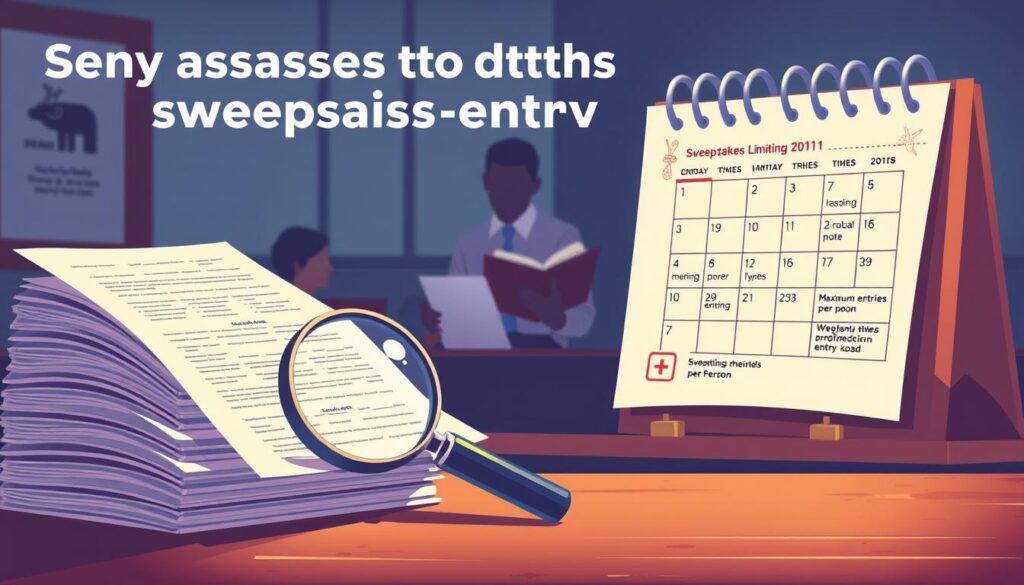
Critical Restriction Categories
Four primary factors govern participation caps:
- Individual ceilings: Maximum submissions per person
- Household rules: Shared address restrictions
- Time windows: Daily/weekly submission periods
- Technical barriers: Device/IP tracking systems
Many promotions combine these elements. A typical structure might allow:
| Submission Type | Daily Limit | Total Limit |
|---|---|---|
| Online form | 5 entries | 50 entries |
| Social media | 2 entries | 20 entries |
| Mail-in | 1 entry | 10 entries |
Legal expert Mark Richardson notes: "Smart participants cross-reference official rules with state laws to avoid accidental disqualification. Technical tracking systems now detect 93% of limit violations."
Strategic approaches include:
- Tracking submission counts across platforms
- Scheduling entries throughout promotion periods
- Verifying household member eligibility
Ensuring Legitimacy: Spotting Scams and Avoiding Fraud
Protecting yourself from fraudulent schemes requires sharp awareness of common deception tactics. Genuine promotions never demand payments for prizes. Let’s explore critical warning signs and verification methods to safeguard your data and participation efforts.
Red Flags in Promotions
Requests for upfront fees signal scams. Legitimate sponsors never ask for credit card information or wire transfers to claim rewards. Be wary of unsolicited prize notifications lacking specific contact information.
Fraudulent offers often misuse government agency names to appear credible. Authentic promotions clearly state sponsor address details and official rules. Pressure to act immediately or provide sensitive data should trigger caution.
Verification Essentials
Cross-check sponsor contact information through official websites or business registries. Valid promotions list physical address details, not just PO boxes. Search for past winners lists and independent reviews to confirm legitimacy.
Always review privacy policies before sharing personal information. Reputable sponsors protect participant data and disclose usage terms. When in doubt, contact consumer protection agencies to verify unexpected prize claims.
FAQ
What defines a sweepstakes under U.S. law?
A sweepstakes is a promotional contest where winners are chosen randomly. Federal and state laws require no purchase or payment (consideration) to enter, ensuring compliance with anti-gambling regulations.
Why do sponsors impose entry limits?
Entry limits prevent abuse and ensure fairness. They also help brands comply with state-specific rules, like New York’s cap on daily entries, while maintaining promotional integrity.
How do “no purchase necessary” rules protect entrants?
These rules guarantee equal winning odds for all participants, regardless of spending. Brands like Coca-Cola or Publishers Clearing House must offer free entry methods, such as mail-in options, to meet legal standards.
What are common red flags in fraudulent promotions?
Requests for payment, unclear official rules, or demands for sensitive data like Social Security numbers signal scams. Legitimate sponsors like McDonald’s Monopoly or PCH never require fees to claim prizes.
How do state laws affect entry eligibility?
States like Florida and Rhode Island restrict sweepstakes requiring upfront purchases. Others, like California, mandate prize value disclosures. Always review location-based terms before entering.
What details must official rules include?
Rules must outline entry methods, deadlines, prize descriptions, odds, and eligibility criteria. For example, Amazon’s “Prime Day Sweepstakes” clearly states age requirements and prize fulfillment processes.
Can social media influence entry limits?
Yes. Platforms like Instagram or Twitter may impose their own restrictions. A brand’s post tagging #Sweepstakes might cap daily entries or require public profile visibility for validation.
How are winners typically notified?
Sponsors use email, phone calls, or certified mail. The FTC requires prompt public winner lists for transparency. For instance, HGTV’s “Dream Home” announces results on their website and via registered mail.
What federal agencies regulate sweepstakes?
The FTC enforces truth-in-advertising laws, while the USPS investigates mail fraud. Violations, like deceptive claims in Publishers Clearing House mailers, can lead to fines or legal action.
Why is verifying sponsor details critical?
Scammers often mimic trusted brands. Cross-check contact information against official websites or BBB listings. Legitimate sponsors like Target or Home Depot provide clear customer service channels for verification.