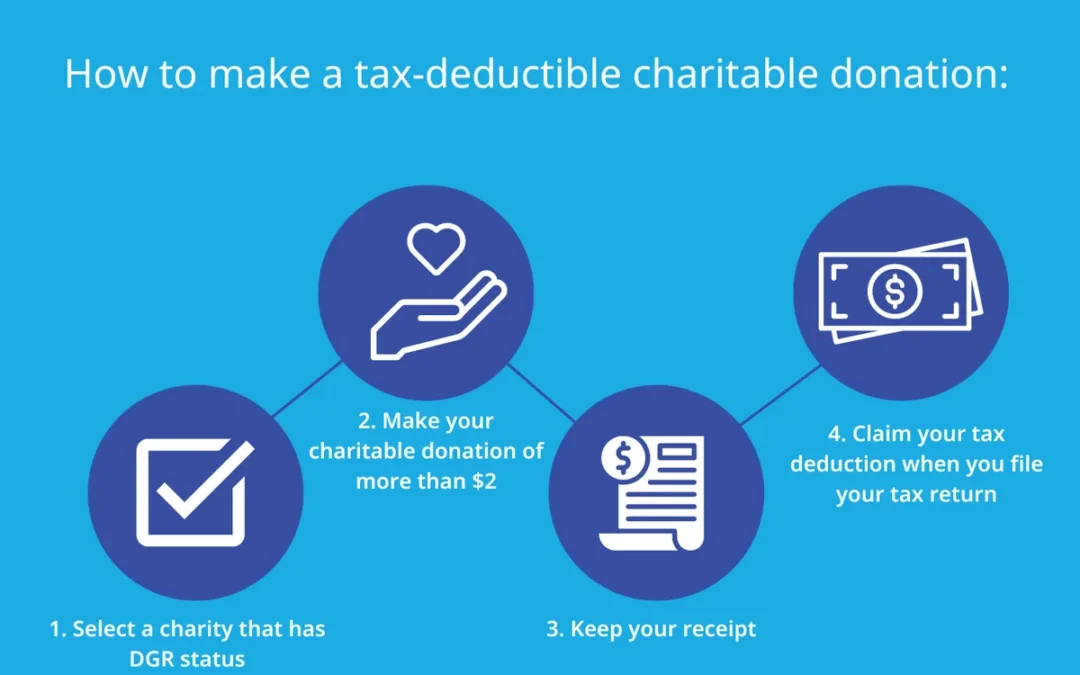
Charity sweepstakes have become an incredibly popular way for 501(c)(3) nonprofits to raise funds. Participants love the dual benefit of supporting a great cause while getting a chance to win a massive prize. However, when tax season arrives, many donors face a stark reality check from the IRS regarding how these transactions are classified.
By IRS definition, a true charitable contribution is a gift given without expecting anything in return. When you enter a charity sweepstakes, you enter the "got-something-in-return" category because you purchased a chance to win a prize. If you want to claim a deduction for supporting a charity giveaway, you must understand the strict mechanics of "dual-character" contributions and the Alternate Method of Entry (AMOE).
The Core Rule: You Cannot Deduct the Cost of the Ticket
The absolute baseline rule enforced by the IRS is that money spent on games of chance—including raffles, lottery tickets, bingo, and charity sweepstakes entries—is not deductible as a charitable contribution.
Why the IRS Disallows It
When you buy 100 entries for $50 each to win a luxury home or a car sponsored by a charity, the IRS treats the $50 as a wager, not a donation. Because you received consideration (the statistical chance to win a valuable asset), the value of the transaction is tied to the gamble.
Even if you don't win a single thing, you still receive the entertainment value and the chance to win during the drawing period. Therefore, you cannot simply write off the entry fee on Schedule A of your Form 1040.

How to Get a Tax Deduction for Sweepstakes Donations
The "Quid Pro Quo" or Dual-Character Contribution Exception
There is a narrow legal path where a portion of your financial support can become tax-deductible, but it requires explicit documentation from the hosting nonprofit. This is known as a dual-character contribution or a quid pro quo donation.
The Math Behind a Partial Deduction
To claim a partial deduction, the amount you paid must exceed the Fair Market Value (FMV) of what you received in return, and that excess amount must be intended as a direct gift.
-
The Ticket Value: The charity must establish a fixed value for the basic entry.
-
The Pure Donation: If the charity sells a "VIP Package" for $500 that includes $50 worth of sweepstakes entries and explicitly designates the remaining $450 as a straight, unconditional donation to the cause, that $450 is deductible.
-
Written Acknowledgment: For any quid pro quo contribution over $75, the charity is legally required to provide you with a written statement breaking down the value. It must specify the exact value of the goods or services provided to you and state the specific portion that is tax-deductible.
Leveraging the Free Alternate Method of Entry (AMOE)
Because charity sweepstakes are legally categorized as sweepstakes and not lotteries, they are required by law to offer a free path to entry. This creates an interesting tactical dynamic for donors who want to support a charity while maximizing their tax deductions.
Separation of Entry and Giving
If you want to maximize your tax write-offs while still participating in the giveaway, you can separate the two actions entirely:
-
Enter for Free: Use the charity’s official rules to locate their free entry path (whether it is an online form or a mail-in postcard). Submit your entries without paying a dime.
-
Make a Direct Donation: Go directly to the charity’s main donation portal and make a straight, unconditional cash contribution of $50, $100, or more.
By executing these two parallel actions, you successfully secure your chances in the drawing via the legal AMOE requirement, and your direct cash contribution becomes 100% tax-deductible on Schedule A. The charity will issue you a standard donation receipt for the full amount, completely bypassing the lottery wager restriction.
The Post-Win Tax Trap: Reporting Your Prize
If your strategy pays off and you actually win the charity sweepstakes, the tax conversation changes completely. Winning a prize from a charity does not shield it from the IRS.
-
Ordinary Income: The Fair Market Value of the prize is treated as ordinary income and is stacked on top of your existing tax bracket.
-
The $2,000 Threshold: Following the One Big Beautiful Bill Act, if your prize is valued at $2,000 or more, the charity must issue you a Form 1099-MISC.
-
Withholding Requirements: For grand prizes exceeding $5,000, charities are often required to withhold 24% for federal taxes before releasing the prize, which can cause logistical hurdles if the prize is a physical item like a car.
Mitigate the Winner's Tax with KTS
Winning a charity sweepstakes is a beautiful moment, but the sudden arrival of a 1099 form can quickly erase the joy if you aren't prepared for the tax bill.
This is where a Keep The Sweep (KTS) membership changes the game. For a $25 annual fee, KTS serves as your financial guard against the progressive brackets that come with a major win. Through our community-funded model, we settle the federal and state tax liabilities for your registered sweepstakes wins. KTS ensures that your philanthropic luck stays financially rewarding, taking care of the IRS while you celebrate supporting a great cause.